
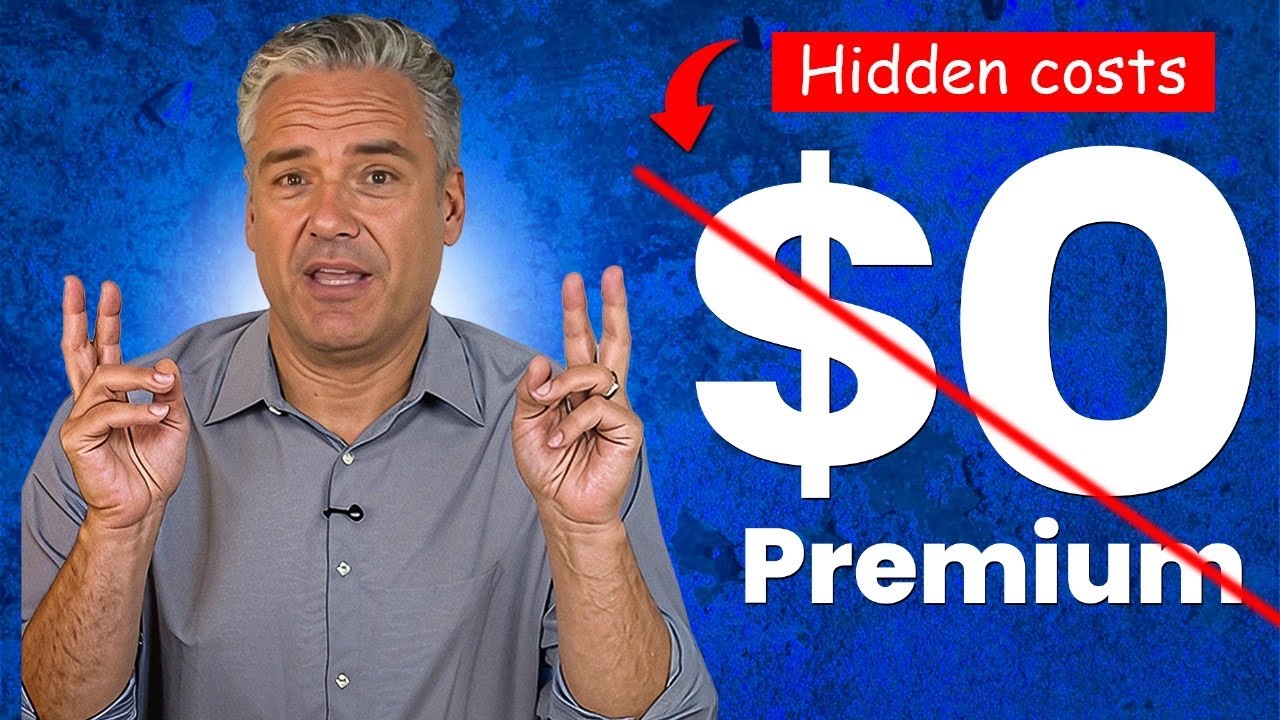
Tired of those Medicare ads yet?
Every fall, the same promises show up on repeat. Zero-dollar premiums. Dental. Vision. Hearing. Maybe a grocery allowance thrown in for good measure.
If you didn’t know better, you might think somebody had finally figured out how to make Medicare free.
They haven’t.
A $0 premium Medicare Advantage plan can be a perfectly reasonable choice. But that big zero tells you only one thing: the plan doesn’t charge an additional monthly plan premium. It doesn’t tell you what happens when you actually need care.
That’s where the real comparison begins. Let’s look at how these plans work, where the costs can hide, and when choosing one makes sense.
What Does a $0 Premium Medicare Advantage Plan Actually Mean?
Medicare Advantage, also called Part C, is offered by private insurance companies approved by Medicare. Medicare pays those companies to provide your Medicare-covered benefits.
That payment helps explain how a carrier can offer a plan without charging you an additional monthly premium. The insurance company is still getting paid. The money simply isn’t all coming from a separate premium you send the plan.
But don’t confuse a $0 plan premium with $0 Medicare costs. You generally must continue paying your Medicare Part B premium. Some plans help pay part of that premium, and some people qualify for assistance. Those are separate considerations.
You may also have deductibles, copayments, and coinsurance when you use covered services. Prescription costs and expenses for services the plan doesn’t cover can add to the total.
Matt’s tip: When you see “$0 premium,” translate it to “no additional monthly plan premium.” Then ask the next question: What will I pay when I use it?
Why Are There So Many $0 Premium Plans?
Because zero gets your attention.
Insurance companies compete for Medicare Advantage enrollment, and a low monthly premium is an easy selling point. Explaining hospital copays, drug tiers, and provider networks takes a little longer than putting a big zero on a television screen.
That doesn’t mean every $0 premium plan is a bad deal. It means the advertisement isn’t the whole comparison.
Plans make different choices about networks, cost-sharing, and extra benefits. Two plans with the same premium can leave you with very different expenses. A plan that works well for your neighbor may be a poor fit for your doctors, prescriptions, or budget.
The Costs That Matter After the Commercial Ends
The premium is the cost you can see before you use the plan. Cost-sharing is what you may pay once you start using it.
Look closely at specialist visits, hospital stays, outpatient surgery, diagnostic tests, therapy, medical equipment, and other services you might need. A low office visit copay doesn’t tell you what a hospital admission will cost.
Also check whether a service uses a copayment or coinsurance. A copay is generally a set dollar amount. Coinsurance is a percentage of the covered cost. A percentage can be harder to budget for when you don’t know the price of the service.
These costs vary by plan. A $0 premium plan doesn’t automatically have worse benefits than a plan that charges a premium. You have to compare the actual documents.
Matt’s tip: Don’t ask only, “What does it cost each month?” Ask, “What could it cost in a year when I need more care than I expected?”
Networks: Your Doctor Accepts the Carrier—But Do They Accept Your Plan?
Here’s a small detail that can create a very big headache: an insurance company can offer several different Medicare Advantage plans in the same area. A doctor’s office may participate in one and not another.
“We take that insurance company” isn’t specific enough.
Confirm the exact plan name and, when available, the plan ID with both the provider’s office and the insurer. Check your primary care doctor, specialists, preferred hospital, and other facilities you use. Confirm participation for the coverage year you’re considering.
In an HMO, you generally use the plan’s network, with exceptions such as emergency care and certain urgently needed services. PPOs generally allow out-of-network care, but you may pay more. The details matter, and some plans have additional rules.
Neither label tells you whether your particular doctors are available. Read the plan’s network rules and verify the names that matter to you.
Prior Authorization Deserves a Place in the Comparison
Some services require the plan’s approval before you receive them. That’s called prior authorization.
It doesn’t mean a service will automatically be denied. It does mean there may be another step between your doctor’s recommendation and the care being scheduled or paid for.
If you receive ongoing treatment or expect a procedure, ask about approval requirements, referrals, and how your care would be handled under the new plan. These rules can apply to plans with or without a monthly premium.
A benefit list tells you what may be covered. The plan’s rules help explain how you get that coverage.
Understand the Maximum Out-of-Pocket Limit
Your Medicare Advantage plan has an annual limit on your spending for covered Part A and Part B services. You’ll often see it called the maximum out-of-pocket limit, or MOOP.
This is an important protection. It’s also a number you should understand before you enroll.
Check the in-network limit and, if applicable, the combined in-network and out-of-network limit. Then ask whether you could manage that amount during a difficult health year.
The medical out-of-pocket limit isn’t a cap on every dollar you spend. Premiums and Part D prescription drug costs don’t count toward that medical limit. Costs for noncovered services generally don’t count either. Part D has its own rules and out-of-pocket protection.
There isn’t one dollar threshold that makes a plan right or wrong for everyone. Compare the actual limits, your savings, and the amount of financial uncertainty you can comfortably carry.
Check Every Prescription, Every Year
A plan can keep its premium at zero while changing what you pay for a medication.
Review each prescription by name, dosage, and frequency. Check the formulary, drug tier, deductible, preferred pharmacies, and any prior authorization, step therapy, or quantity limits.
Pay particular attention when a fixed copay becomes percentage-based coinsurance. Compare the estimated annual drug cost at the pharmacy you actually use, rather than stopping at the monthly premium.
A plan with prescription coverage included doesn’t promise that every medication will be covered at the price you expect.
An Expensive “Free” Decision That Almost Happened
In the video, I share a story from Nikki, my wife and business partner at Brickhouse Agency.
A client was considering a $0 premium plan after seeing an advertisement featuring dental, vision, hearing, and a grocery allowance. Before switching, they asked Nikki to check the details.
She found that two specialists were outside the proposed plan’s network. A prescription that had carried a $47 copay was also moving to a higher tier. In that client’s comparison, the proposed switch could have meant roughly $1,800 more over the following year.
They stayed with their existing plan. That’s one client’s experience, not a prediction of what any particular plan will cost you. But it illustrates the point: the premium alone couldn’t reveal whether the change made financial sense.
The doctor list and the medication list did.
When a $0 Premium Plan Can Make Sense
There is absolutely nothing wrong with choosing a $0 premium Medicare Advantage plan.
It may fit well if your doctors and hospitals participate, your prescriptions are covered affordably, and you’re comfortable with the plan’s rules and potential medical costs. Avoiding an additional monthly premium can be valuable on a fixed income.
Just don’t build the entire decision around being healthy today. Nobody gets to order next year’s health in advance.
Think through both an ordinary year and a more expensive year. If the plan still fits your needs and budget, that zero may be useful. It simply shouldn’t do all the thinking for you.
Matt’s tip: A $0 premium isn’t a red flag by itself. It’s a reminder to look under the hood.
Your Five-Point $0 Premium Plan Checklist
- Doctors and hospitals: Confirm your providers participate in the exact plan for the coming coverage year. Include specialists and facilities, not just your primary care doctor.
- Prescriptions: Compare coverage, tiers, deductibles, pharmacy pricing, and estimated annual drug costs for your complete medication list.
- Medical costs: Review hospital, surgery, specialist, and testing costs alongside the medical maximum out-of-pocket limit.
- Extra benefits: Check allowances, participating providers, eligibility restrictions, and what you’ll actually use. A benefit you can’t use isn’t worth much to your budget.
- Your health outlook: Consider ongoing treatment, a new diagnosis, planned surgery, and your ability to handle unexpected expenses.
A useful starting point is to add up annual premiums, expected medical cost-sharing, and estimated prescription costs. Then consider a separate scenario with substantially more medical care.
That won’t predict the future. It will give you a more useful comparison than a commercial can.
Review the Plan Again Each Fall
A plan that worked this year deserves another look before next year.
Read your Annual Notice of Change and the coming year’s Summary of Benefits and Evidence of Coverage. Your premium can stay the same while other costs or benefits change. Verify providers and prescriptions separately, too.
If your plan is ending, review your notice carefully. Our guide to what happens when a Medicare Advantage plan ends explains the issues to watch for. You can also read about special enrollment periods after a plan termination.
And if an ad focuses on money back toward Part B, start with our explanation of Medicare giveback plans. A giveback benefit is one piece of the cost comparison, not the whole decision.
Get Help Comparing the Real Numbers
You don’t have to decode all of this by yourself.
Nikki and the team at Brickhouse Agency offer free, appointment-only consultations by phone or Zoom. They’ll review your doctors, prescriptions, and costs so you can compare your options using your own information.
There’s no pressure and no obligation to enroll.
Don’t let a television commercial—or a seminar where everything smells like pancakes—make the decision for you. Bring your questions, your medication list, and the names of the providers you want to keep.
The Bottom Line: Choose the Fit, Not Just the Zero
A $0 premium Medicare Advantage plan can work well. But “no additional monthly premium” and “no healthcare expenses” are two very different things.
Look at the network. Check the drugs. Understand the copays, coinsurance, approval rules, and out-of-pocket limits. Then decide whether the complete package fits your life.
Medicare advertisements are designed to get your attention. Your plan comparison should help you make a decision.
I’m Matt Feret. Here’s to your wealth, wisdom, and wellness.
Frequently Asked Questions About $0 Premium Medicare Advantage Plans
Are $0 premium Medicare Advantage plans really free?
No. A $0 premium means the plan charges no additional monthly plan premium. You generally still pay your Part B premium and may have deductibles, copayments, coinsurance, prescription costs, and expenses for noncovered services.
How can Medicare Advantage plans charge a $0 premium?
Medicare pays private insurance companies to provide Medicare Advantage benefits. A carrier may offer a plan with no additional monthly premium while using those payments and the plan’s benefit and cost-sharing structure to fund coverage.
Is a $0 premium Medicare Advantage plan a bad choice?
Not necessarily. It may be a good fit if your providers participate, your medications are covered affordably, and you can manage the plan’s rules and potential out-of-pocket costs. Compare the full plan rather than choosing on premium alone.
Does the Medicare Advantage out-of-pocket maximum include prescription drugs?
No. The medical maximum out-of-pocket limit applies to covered Part A and Part B services. Part D prescription drug costs have separate rules and do not count toward that medical limit. Premiums and noncovered services generally do not count either.
Should I review my plan if the premium is still $0?
Yes. Other costs, benefits, provider participation, and prescription coverage can change even if the premium stays the same. Review your Annual Notice of Change and the coming year’s plan documents, and verify your doctors and medications.
This article is adapted from Matt Feret’s video published October 16, 2025. References in the video to changes heading into 2026 describe that period; check current plan documents for the coverage year you are considering.
Sources: Medicare costs; Understanding Medicare Advantage Plans; Annual Notice of Change.